A Waterwoman's Perspective on the Roadless Rule

I was recently asked to participate in two public town halls held in Sacramento and South Lake Tahoe, California to provide a forum to learn about the current proposal by the Secretary of Agriculture to rescind the 2001 Roadless Rule. The town halls were hosted by the Sierra Club and the Sierra Nevada Alliance (of which I am a board member), since the US Forest Service is not allowed to host any public town halls on this proposal. This is in stark contrast to the 600 meetings held when the Roadless Rule was established, receiving 1.6 million comments, 95% of which were in favor.

I did not speak as a representative of the Sierra Club, the Sierra Nevada Alliance, or the US Forest Service. Rather, I provided a perspective based on my 28-year career as a USFS hydrologist on the Lake Tahoe Basin Management Unit.
During my first summer as a hydrologic technician in Lake Tahoe in 1989, my first assignment was to inventory every mile of stream, road, and trail in Ward and Blackwood Creek Canyons, to look for signs of accelerated erosion. I low-crawled through interminable thickets of alder in shallow rocky stream beds, ate my lunch at a slow jog because of hordes of meat bees, and bounced around in a 4x4 truck over roads I decided I would much rather walk.
Over those two months, I also viewed hidden waterfalls and flowering riparian meadows in remote areas of the watershed rarely seen by humans, and what I learned set the foundation for the rest of my career. At the end of that summer, I was hired as a permanent GS9 hydrologist, and soon found out I had gotten a job in wildland hydrologist fantasy land.
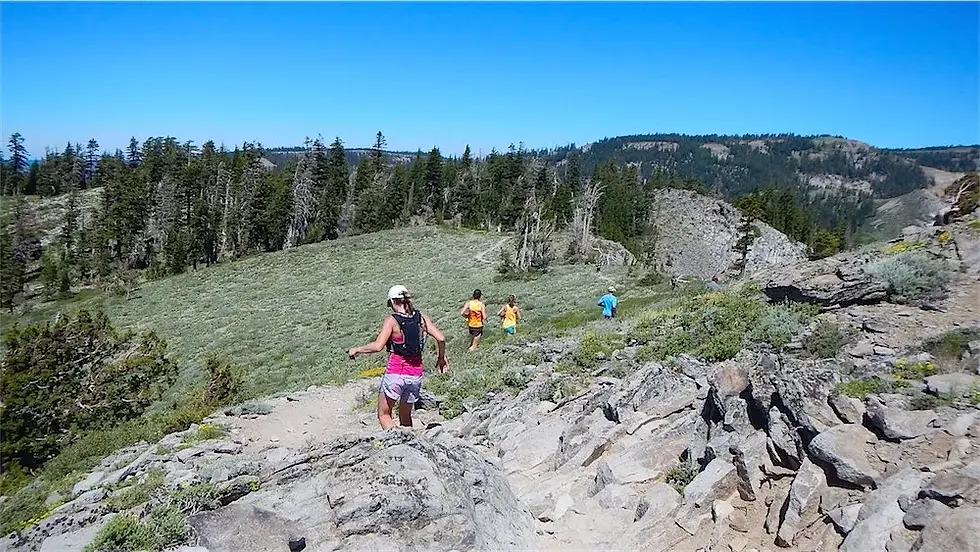
The LTBMU gets more funding for implementing restoration projects to protect water quality and restore stream channels and riparian meadows than any other Forest in the country, because of Lake Tahoe. I spent my entire career being a part of that, and a large part of that work involved Forest roads.
During my career, my colleagues and I inventoried every mile of road in the LTBMU to identify road segments that should be reconstructed or decommissioned to mitigate adverse impacts to water quality and stream channels. Working with our engineering, recreation, and vegetation management departments, the LTBMU eliminated 100 miles of legacy roads (left over from historic logging and unauthorized OHV use) and retrofitted almost every mile of the 250 miles of classified roads currently maintained on the Forest.
Why did we do this work? Because if not properly managed, roads can be the most significant cause of erosion and transport of sediments into streams and rivers from Forest Service land.
A well-designed road has minimal adverse impacts if maintained on average every two years. Conversely, poorly designed and unmaintained roads, especially in steep terrain, in proximity to stream channels, can have significant impacts on both water quality and stream channel health because of excessive sediment erosion and stormwater runoff.
While the LTBMU, because of its status, has largely been able to keep up with road maintenance needs, nationally, the FS currently has a backlog of billions of dollars in road maintenance. Meaning, maintaining roads is currently not happening at the frequency it should.

Which brings me to the 2001 Roadless Rule https://www.federalregister.gov/documents/2001/01/12/01-726/special-areas-roadless-area-conservation. For many reasons, the Roadless Rule is an important environmental policy providing a national framework for protecting large areas of Forest Service lands, particularly as recent funding cuts and staffing losses have created unprecedented chaos and uncertainty in the agency. Additionally, there is pressure to increase extractive removal of timber on Forest Service lands from the current administration.
During most of my career, the Forest Service nationwide had to address the reality that there were too many legacy roads on our lands, we were losing ground every year in maintaining our designated road system, and both legacy roads and inadequately maintained designated roads were contributing to significant water quality problems. Concurrently, the agency also recognized there were large portions of the forest relatively far from communities and developed recreation areas that were relatively un-roaded and should be kept that way.
And so, the Roadless rule was born. And like every good policy, care was taken to identify exceptions. I am not going to list all the exceptions, but I will paraphrase one currently relevant to planned work in the Tahoe Basin, as an example.
Smaller diameter timber may be cut, sold, or removed in inventoried roadless areas if the Responsible Official determines it is needed to improve threatened, endangered, proposed, or sensitive species habitat, or to maintain or restore the characteristics of ecosystem composition and structure to reduce the risk of uncharacteristic wildfire effects.
Given the current impacts of climate change on top of historic decades of fire suppression, I’m not sure where this exception could not be applied if the resources were available to do the work. But what I think the current administration is balking at is the need to justify using this exception through the NEPA analysis process, without taking out a lot of large-diameter trees for timber production, and leaving no new permanent roads behind.
In the Tahoe Basin, this Roadless rule exception is currently being utilized for the Lake Tahoe West Restoration Project, planned to begin in October of 2026. You can find the USFS Environmental Assessment online here.
This project proposes intensive fuels reduction and forest health treatments across roughly 60,000 acres along the west shore of Lake Tahoe, which includes a little over 3,000 acres of Inventoried Roadless Areas (IRAs), to include mechanical thinning, hand thinning, and prescribed fire. Based on the environmental analysis, the proposed action is currently allowable under the existing roadless rule, as no new permanent roads will be built in the roadless area.
From my perspective, the Roadless rule continues to be a critical environmental policy, and essential forest management work can continue within that policy, through the environmental analysis (NEPA) process.
The impacts of climate change and fire suppression on Forests within roadless areas are real, as are the benefits of appropriate thinning and prescribed fire treatments.
Some forest management professionals believe the current roadless rule is too restrictive to address current conditions when it comes to reducing forest fuels and fire risk. While they do not support rescinding the roadless rule, they believe some modifications should be made to make it easier to construct temporary roads, and even some permanent roads for management access (not open to the public). In theory, these roads would be designed to require little maintenance while not in use, and would create access for long-term forest management such as prescribed fire activities and forest thinning to mimic historic fire regimes. These types of roads are currently classified as Level 1 roads in US Forest Service terminology, which is an intermittent-use road closed to all public motor vehicle traffic and are placed in "storage" between uses for periods exceeding one year. When a Forest Service Level 1 road is placed in long-term storage, management practices are implemented to stabilize the road, restrict motorized use, and make it hydrologically inert to prevent erosion and water quality degradation without completely removing it from the transportation inventory.
I believe much of the forest health work needed to improve forest health and reduce fire risk can already be done under the current Roadless Rule including building temporary roads. The environmental analysis would have to identify how new temporary roads would be designed and maintained to mitigate adverse environmental impacts while in use, and fully decommissioned once the work is completed.
But I am also open to the argument that for some areas, new Level 1 road building for land use management should be allowed in a Roadless Rule modification to implement forest health work more effectively. If they’re smart, they are already including an analysis of this alternative in the EIS, along with the analysis for Roadless Rule rescission. The analysis for a ‘Modification Alternative’ would describe requirements for ensuring new Level 1 roads would retain current roadless area characteristics, including unfragmented wildlife habitat, stable hydrologic function, and a focus on prioritizing undeveloped non-motorized recreation opportunities.
I also believe that under the current administration, rescinding the Roadless Rule would further open the door to their clearly stated goals of opening up more land to commercial logging, and in some areas, more motorized recreational use. While at the same time, through reorganization and funding cuts, providing less resources to manage that land.
Under any scenario, what the Forest Service needs is robust funding. Funding to maintain the staff and resources to ensure the USFS road network is maintained to current standards, and funding to implement the necessary forest health work and best management practices to reduce the risk of catastrophic wildfire and protect ecosystem values like clean water and healthy streams.
The Roadless Rule EIS was supposed to be released in March, which was later revised to April, and at the posting of this blog, a Google search discloses it is “anticipated very soon”.
When the comment period opens, a tsunami of public comments on this topic will be needed. I think 3 million comments may be a good target for this go-round. So, whether you want to comment now or keep your eyes and ears open for when the EIS is released, be ready to act.
The following are the organizations I recommend as portals for sending your message on this issue. The messaging from these non-profits is on point, and your comments are automatically sent to your congressional representative and appropriate agency contacts. As with all public comments, do personalize your message to identify what public lands in roadless areas are important to you and why.
Your voice MATTERS, so I hope you will be a part of the 3 million voicing support for protecting our roadless areas in 2026.
Outdoor Alliance
Trout Unlimited
Backcountry Hunters and Anglers


Comments